Op-Ed
The First Amendment Comes Before the Second
printing, marching, petitioning, then guns — a 17 year old shooter on why regulating them was never un-american
April 1st, 2026 was American in a way I’ve stopped being embarrassed about.
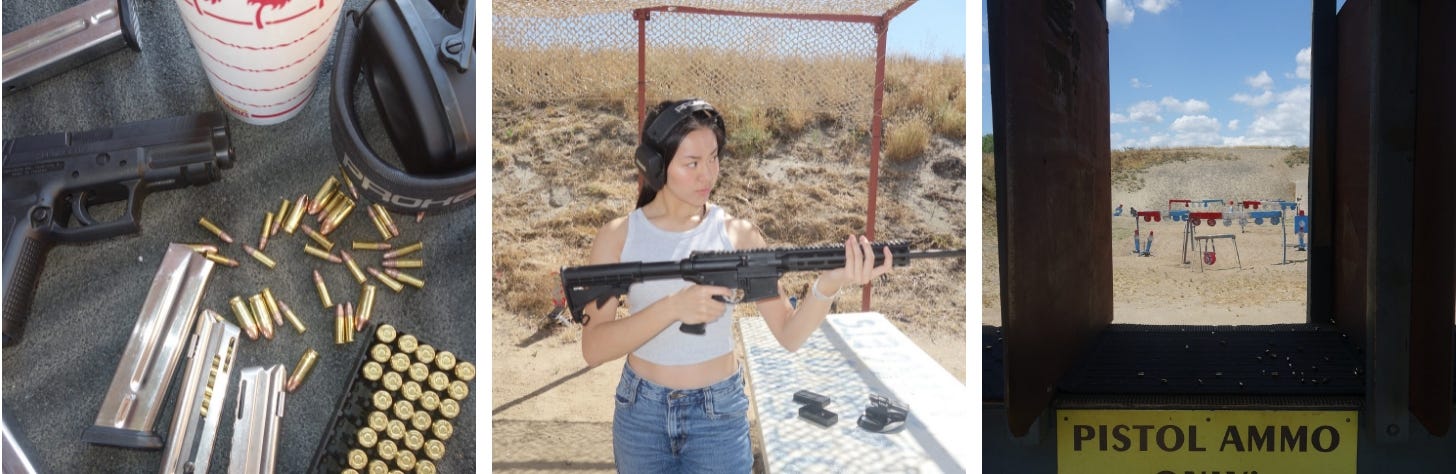
I shot a few guns that afternoon, among them:
- A Springfield Armory XD in 9mm. Made by a company named after the federal arsenal that stored the Continental Army’s guns.
- A Walther P22, .22 caliber, with “CA” on it because California won’t let a dealer sell you a handgun model until the manufacturer has submitted it to the state for testing and gotten it onto a roster.
I felt badass.
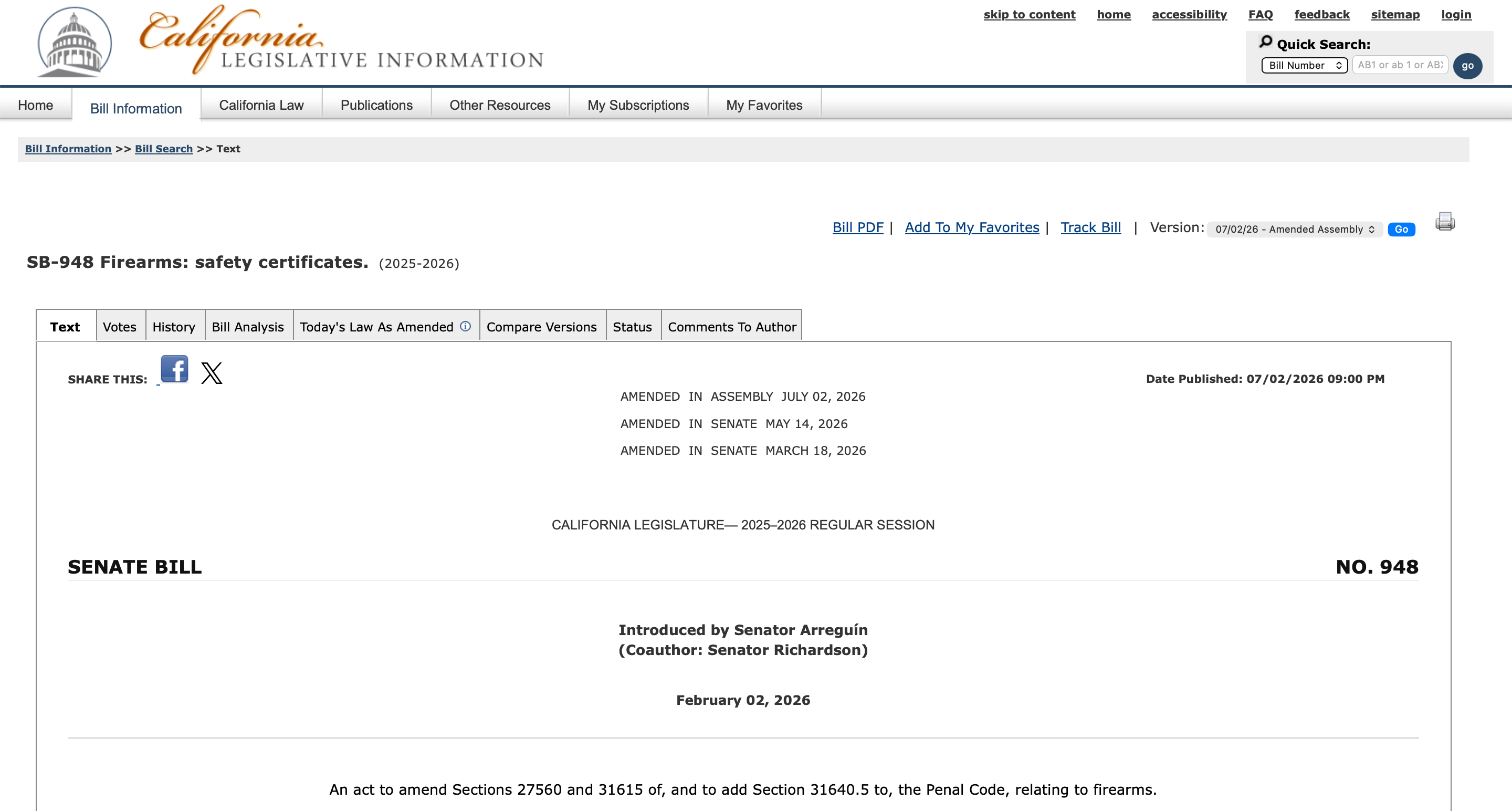
The next month I was discussing the importance of SB 948 with Assemblymember Caloza’s office — which strengthens training requirements for California’s Firearm Safety Certificate and requiring live target training much like a driving test at the DMV before a license is granted.
It seems a bit counterintuitive to some. After all, many think the range and the legislative office regulating it are two different countries. But I keep finding myself in both, and I’m not confused about how they overlap.
This is my reflection on how guns and regulating guns are both American, and why flattening either one into a cartoon has fed into the public health crisis of gun deaths in America.
I — guns are american
where the mythology comes from, in three frames
intro — the tradition of guns
Guns are American. This isn’t a claim anyone needs to defend, and you’re not going to trivia somebody out of a cultural identity anyway.
The tradition is older than the country. The minuteman with a musket over the door. The frontiersman. The homesteader. The sheriff who ran a town of nine hundred people. The father who takes his daughter to a range on a Saturday because that’s what his father did.
Here are three frames nevertheless.
1 — legal
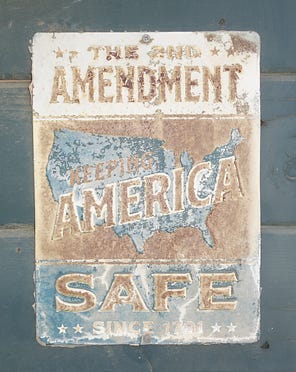
“A well regulated Militia, being necessary to the security of a free State, the right of the people to keep and bear Arms, shall not be infringed.”
The second amendment is twenty-seven words, two clauses, yet is foundational for the debate about firearm regulation.
For most of American history, courts read the two clauses together, treating the right as bound up with militia service. Then in District of Columbia v. Heller (2008), Justice Scalia’s majority held that the Second Amendment protects an individual right, unconnected to any militia, to keep a handgun at home for self-defense.
That’s the version we live in now. It’s the basis for everything downstream.
2 — historical
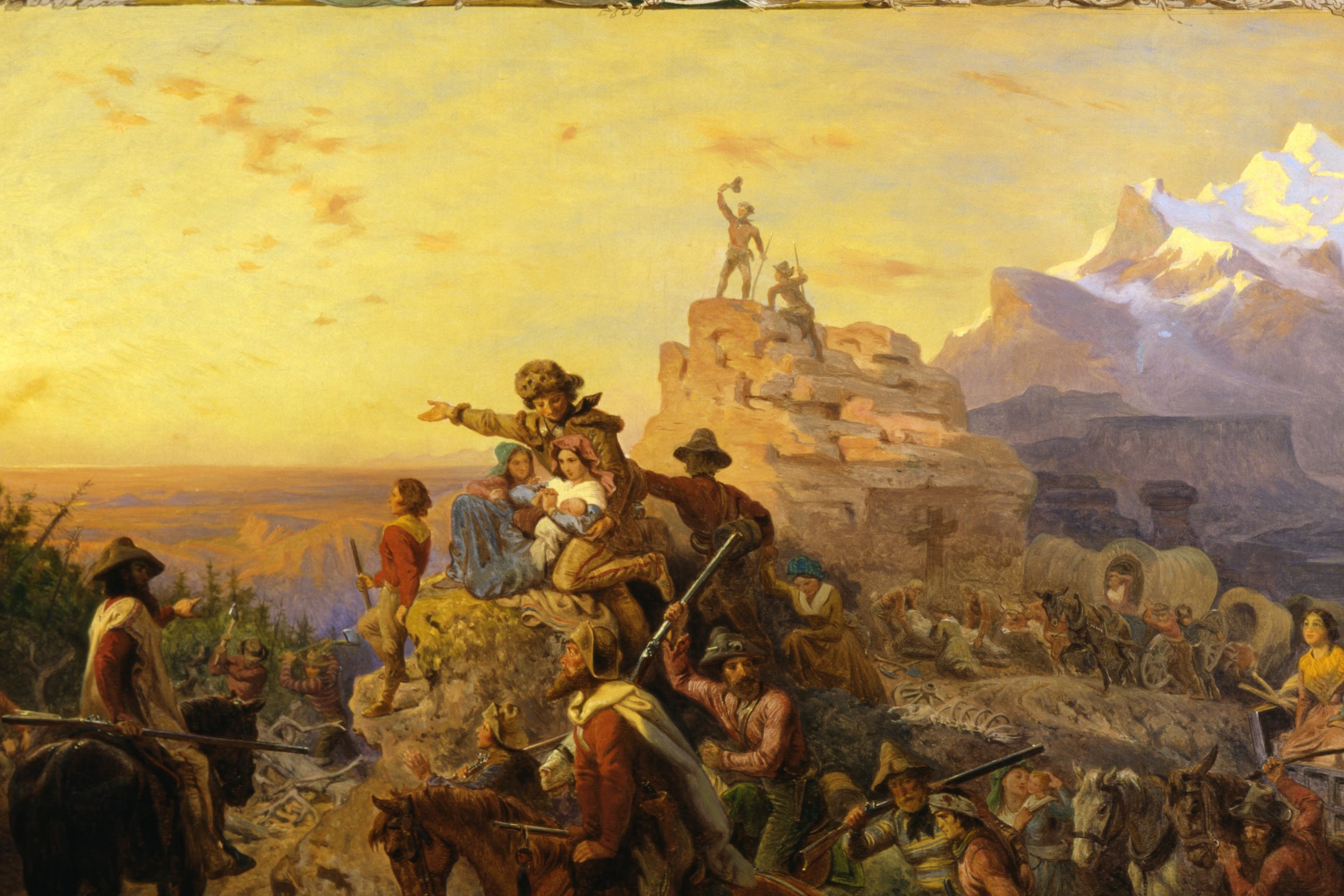
American identity is bound up with firearms because the country was founded through armed revolution and expanded through armed settlement.
- Frederick Jackson Turner’s 1893 frontier thesis turned settler expansion into a theory of national character, and the gun in that frame is the tool of independence: the rifle on the cabin wall, the hunter’s musket, the homesteader’s defense.
- The castle doctrine comes down from English common law, which held that a person’s home is inviolable and may be defended with deadly force. For a lot of gun owners, that’s the whole argument for keeping a firearm at home. Stand-your-ground laws extend the same logic to everywhere else.
3 — cultural
Owning, handling, and firing guns is a feature of ordinary American life at a scale that does not exist in any other developed country. Gun stores, ranges, hunting seasons, gun shows are extremely prominent in this country and crucial to American identity.

extended — what these frames leave out
These frames, for the purpose of simplicity, leave out the gun industry’s role in manufacturing demand across the nineteenth and twentieth centuries. They leave out settler colonialism and the gun’s role in dispossessing Indigenous peoples. They leave out slave patrols and the gun’s role in maintaining the racial order. All of that is also the tradition.
conclusion — guns are american
So fine. Guns are American. I’d just like to finish the sentence, because the version I often hear ends with “...therefore regulating them is un-American.” I think that’s false.
II — organizing is american
the other tradition, exactly as old
intro — the tradition of organizing
Guns are American. So is organizing. The Minutemen organized in town meetings and militia companies, with elected officers. The abolitionists organized. The suffragists organized. The civil rights workers organized. American democracy is built on people getting into rooms, thinking, and deciding things, sometimes with rifles in the corner and sometimes without.
Here are three frames for organizing being American.
1 — writing
Ida B. Wells was born enslaved in Mississippi in 1862 and became a journalist in Memphis. After a friend of hers was lynched in 1892, she started investigating lynchings herself and published what she found: that the rape accusations used to justify them were mostly fabricated, and the real motive was economic.
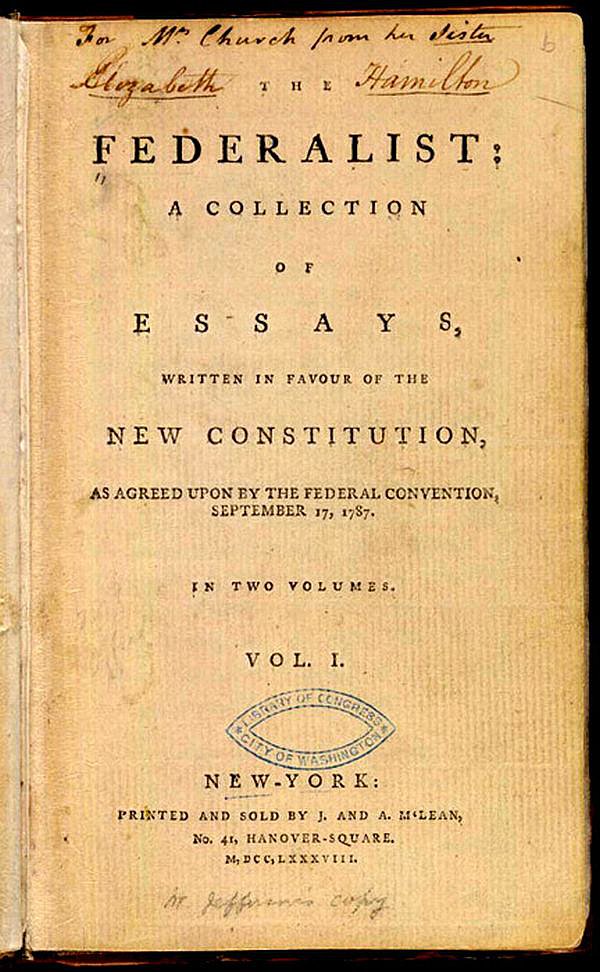
The Federalist Papers were 85 essays that Hamilton, Madison, and John Jay ran in New York newspapers in 1787 and 1788, under a fake name, to talk the state into ratifying the Constitution.
2 — marching
Showing up in a large visible group is the oldest political theater this country has:
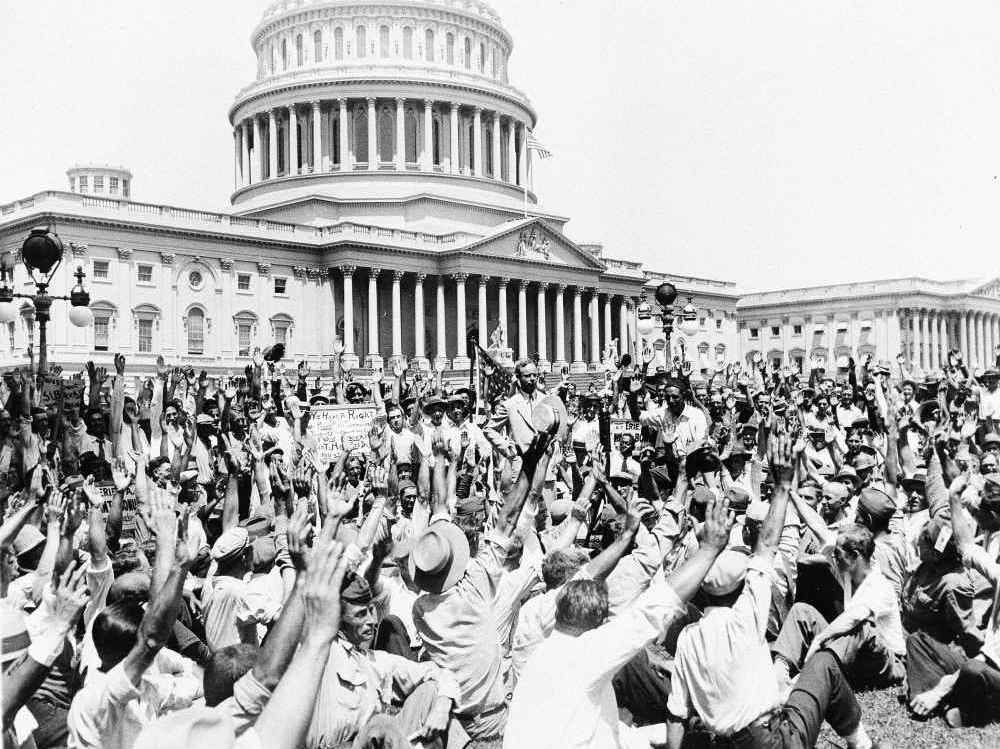
- In 1932, seventeen thousand World War I veterans camped in Washington demanding early payment of a bonus Congress had promised them. Hoover sent the Army to clear the camps and lost the election in November.
- On March 7, 1965, about six hundred people started walking from Selma toward Montgomery for voting rights and got beaten at the Edmund Pettus Bridge on television. The Voting Rights Act was signed that August.
- Fast forward to March 24, 2018, and survivors of the Parkland shooting organized a national march six weeks after the shooting. Estimates show 1.2 to 2 million people showed up.
3 — petitioning
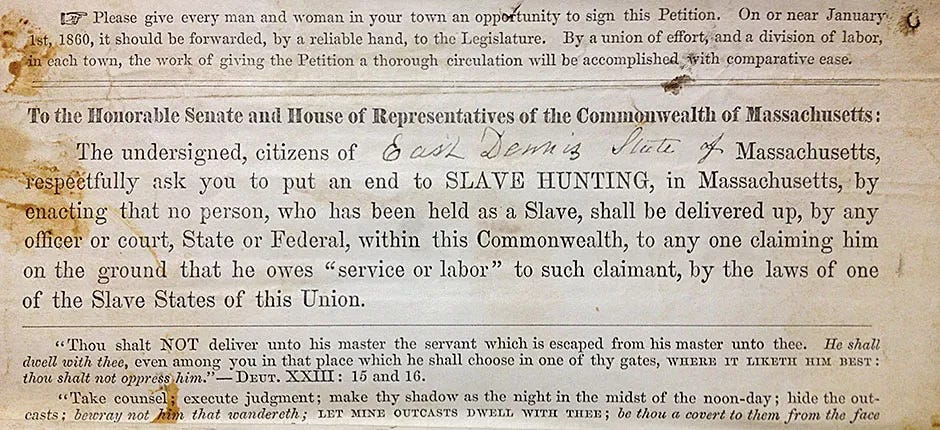
In the 1830s, abolitionists ran mass petition drives and buried Congress in signatures demanding an end to slavery. There were so many that in 1836 the House of Representatives passed a standing rule to automatically table any petition mentioning it, without reading, without debate. John Quincy Adams fought that rule for eight years and got it repealed in 1844.
I spent an afternoon in a district office in May.
conclusion — organizing is american
Printing, marching, petitioning. All three are in the First Amendment, which the founding fathers put immediately before the Second.
The conversation usually files organizing against gun violence as an outsider tradition, something imported and vaguely European. Rather, it’s the same tradition that produced the country. Tocqueville wrote a whole book about how strange and good Americans are at this.
III — gun organizing is american
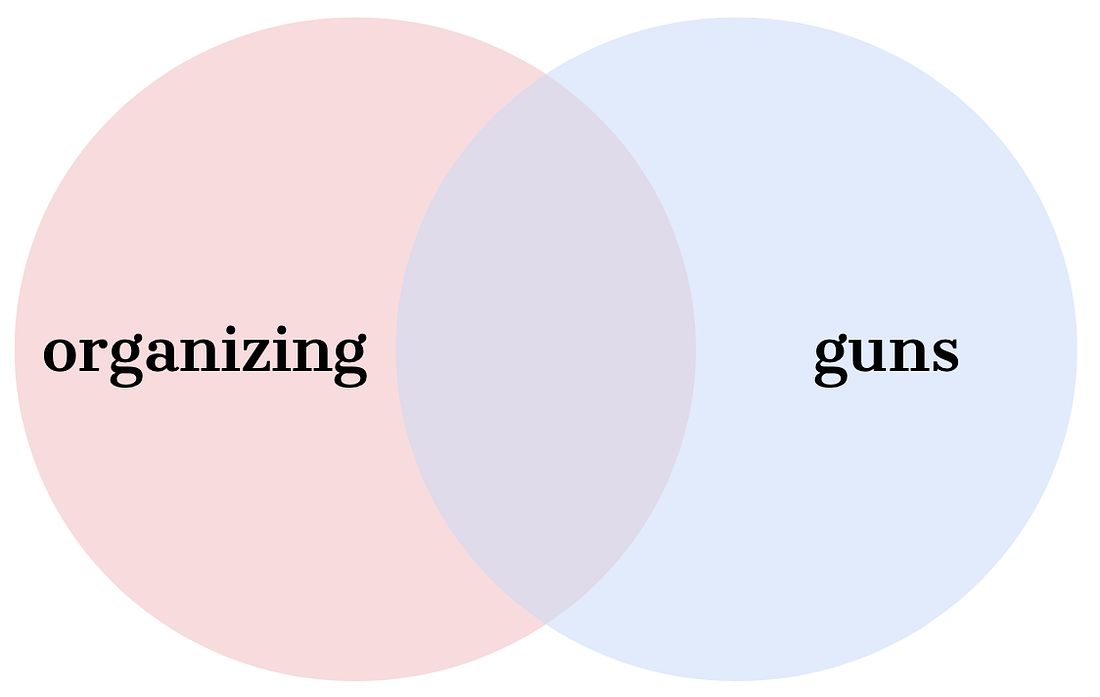
where the Venn diagram overlaps
intro — same people, same rooms
Two traditions so far, presented separately. This section is where they turn out to be the same one.
The people who wrote the Second Amendment also built a registry. The organization that now fights hardest against gun laws spent its first century helping write them. Then, on one night in 1977, that stopped.
Here’s how the overlap got made, and how it got hidden.
1 — how it began
Five months after ratification, Congress enacted the Militia Act of 1792, requiring every free able-bodied man between 18 and 45 to be enrolled on a public roll, to purchase at his own expense a musket, bayonet, two spare flints and at least 24 cartridges, and to appear at musters where his weapon was inspected.
Was it enforced? Well.. it was famously toothless and half the country never showed up to a muster in their lives. But the point is what that generation thought the Constitution allowed, which was: quite a lot. Among other regulations were:
- Storage laws. Massachusetts banned storing loaded firearms in Boston homes in 1783. Boston, New York, and Philadelphia all restricted how much gunpowder you could keep and where. Massachusetts also capped Boston gunpowder storage at 25 pounds in 1792 absent supervision by the Board of Firewards, which is the most eighteenth-century sentence I have ever typed.
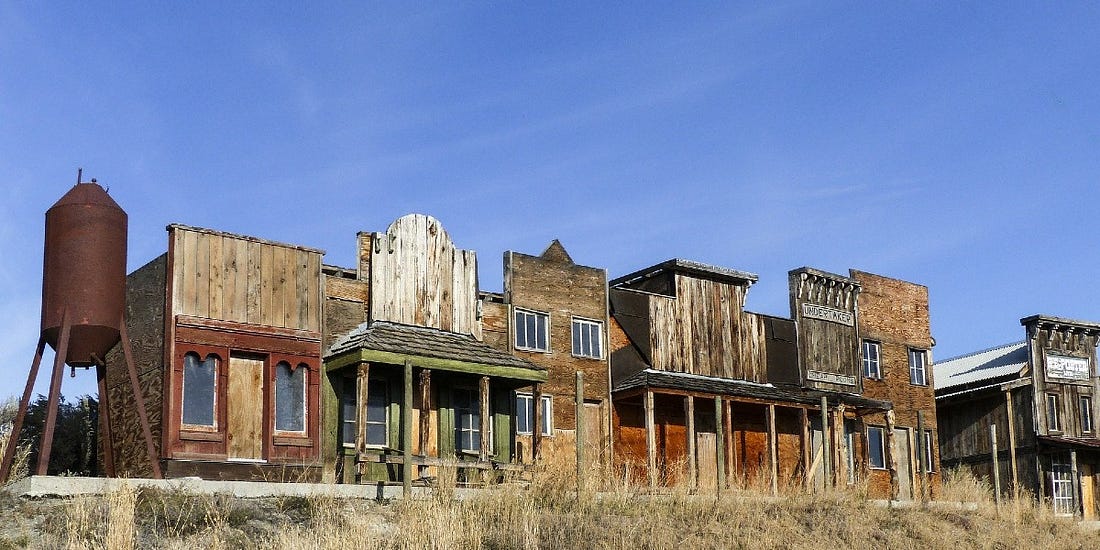
- Frontier towns regulated harder than they do now. Tombstone, Dodge City, and towns across Kansas, Nevada, Montana and South Dakota required visitors to check their firearms at a livery or the sheriff’s office on the way in.
2 — how it evolved (and how the NRA wrote gun control!)
The National Rifle Association (NRA) was founded in 1871 by two Union veterans, Colonel William Church and General George Wingate to fix the atrocious marksmanship they’d watched during the Civil War.
In fact, the organization supported and helped shape the National Firearms Act of 1934 and the Gun Control Act of 1968. Former NRA president Karl T. Frederick even testified to Congress in 1934:
“I have never believed in the general practice of carrying weapons. I do not believe in the general promiscuous toting of guns.”
3 — so… what happened to the NRA
At the annual meeting in May 1977, around a thousand dissenters led by Harlon Carter and Neal Knox voted out the entire leadership by four in the morning and rewrote the bylaws on the floor. The organization pivoted overnight from hunting and safety to constitutional absolutism.
Carter announced they’d be recruiting lawyers and constitutional scholars.
Carl Bogus has documented the strategy: gun-rights organizations funded and generated a large body of individual-right scholarship, much of it written by lawyers employed by or representing those organizations, then pointed at the accumulated volume as evidence of scholarly consensus. It was named the Standard Model.
That’s when Heller, the individual rights reading detailed earlier, was born.
For the record, the NRA also got to its current stance through the most American process imaginable: people organized, raised money, funded scholarship, and won.
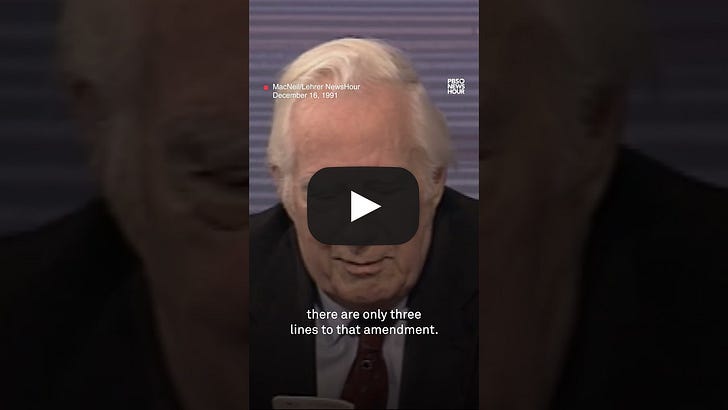
And it wasn’t only liberals who noticed. In 1991, Warren Burger, Nixon’s Chief Justice, went on the MacNeil/Lehrer NewsHour and called the individual-rights reading:
“One of the greatest pieces of fraud, I repeat the word fraud, on the American public by special interest groups that I have ever seen in my lifetime.” He added that if he were writing the Bill of Rights, “there wouldn’t be any such thing as the Second Amendment.”
Please watch the video of him live on public television and absolutely going for it.
conclusion — 49 years old
So here’s the arithmetic. The reading of the Second Amendment that everyone treats as ancient and settled is 49 years old. It’s younger than the Nixon administration is old. It arrived in my mother’s lifetime, and it arrived because people organized for it.
I don’t say that to take it away from anybody. I say it because the version of history where guns and gun regulation were always enemies is not the long version. It’s the recent one.
Which brings me to what that recency costs.
IV — the cartoon
what it costs
intro — where we are now
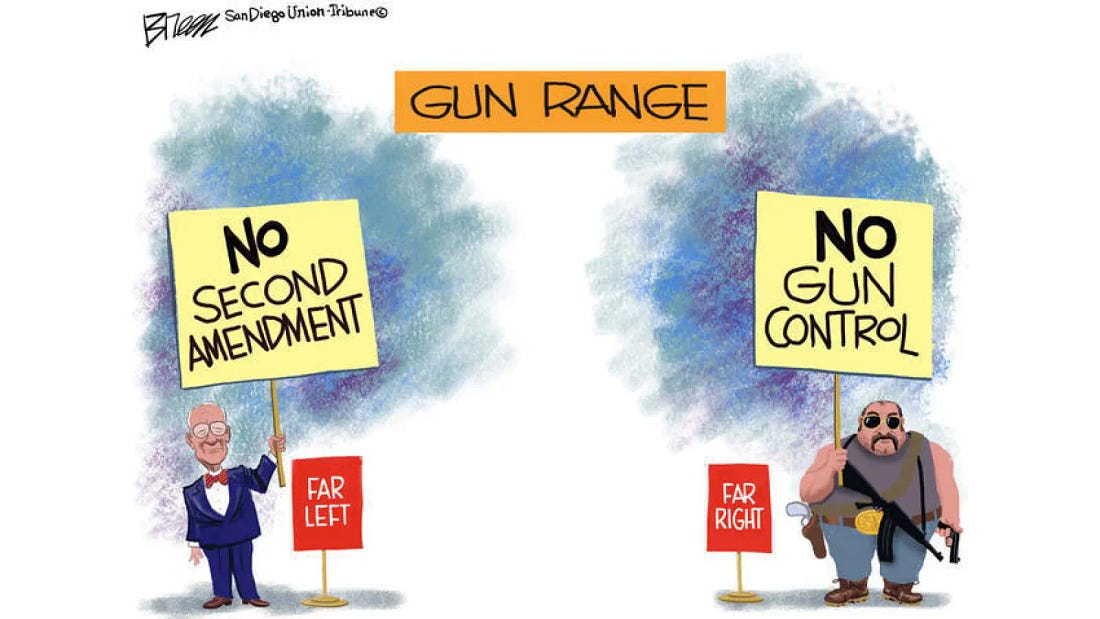
Now that we’ve traversed historical precedent of gun culture, organizing culture, and gun organizing culture, it’s finally time to point out the elephant in the room — the polarization that often exists in discussions about gun regulation. There are two layers to this part of my argument — first about the false binary, then about where we go from here.
1 — “gun grabber” vs. “gun nut”
American gun politics mostly hands out costumes. There are two dominant ones available. One is a man with a bunker, forty rifles, and a grudge, who thinks any rule is the first step toward tyranny. The other is a woman who has never touched a firearm, doesn’t know the difference between a magazine and a clip, and wants yours in a government truck by Friday.
Neither person is real. Both are extremely useful. You don’t have to persuade anybody, you just have to frighten them about somebody else.
And that’s the part that actually costs something. As long as the other side is a cartoon, there’s no conversation, and the conversation is where the boring achievable things live. The lock. The background check. The training requirement. None of that survives a fight between two people who think they’re facing a monster.
Think about what a “gun nut,” or shooter, has to cover. The retired cop who teaches the free safety class at my range on Sunday mornings. The competitive shooters who weigh powder like it’s a chemistry lab. The woman who bought a handgun after a stalking situation. Somebody’s grandfather with one shotgun in a closet since 1978.
Now “gun grabber.” Sarah Brady, whose husband took a bullet in the head before she became the most effective advocate in the Brady movement to counter gun violence. Seventeen-year-olds who have done lockdown drills since kindergarten. And me, holding a Springfield XD on April 1st before my advocacy meetings.
Neither phrase describes anyone I have met at a range or in an organizing meeting. Truth is, it’s not gun lunatics versus blue heart liberals all the time.
2 — “gun control” vs “gun violence prevention”
The second layer of my argument is related to how the advocacy movement has shifted because of recognition that flattening people does little to nothing to advance goals.
The movement against gun violence — organizations like Brady, Giffords, Everytown — has quietly pivoted away from “gun control,” to “gun violence prevention.” Because gun control names a method. Gun violence prevention names an outcome.
Name your movement after your method and every conversation you’ll ever have is about the method. Nobody called the seatbelt movement Car Control. They called it highway safety, and then they went and got the seatbelts.
It’s these pivots that make me hopeful that gun organizing in the future is more in the overlap between “guns” and “organizing” and not existing in silos on its own.
conclusion — here’s the cost
There’s been much progress. There’s also this: 6.7 million American children live in a home with a gun stored loaded and unlocked. Roughly 360 kids a year unintentionally shoot themselves or someone else. More than 70% of that happens in or around a home.
There’s more that needs to be done. Coming from a shooter, that’s not an argument about gun ownership or gun rights. This is the bottom line of public safety.
V — tldr
Guns are American. So is every attempt this country has made to make them less lethal, and the second half of that sentence has never been the enemy of the first.
Congress mandated gun purchases and gun registration in the same year. The NRA taught marksmanship and wrote the machine gun law.
I was at a range in April and a district office in May, and nobody in either room was confused about why I was there.
That’s the overlap. It’s not a small piece of the Venn diagram. It’s most of it.